
Q&A with Stuart Hutchings, Operations Director
We caught up with our Operations Director, Stuart Hutchings, to discuss the scale of operations at Johnsons Aggregates & Recycling (JAR), the role of innovation in resource recovery, and how the business is helping drive a more sustainable, circular economy.
Q: What are your main responsibilities across the business?
A: My role is focused on ensuring the safe and compliant operation of our three sites at Stanton, Whittlesey and Bunny. Alongside that, I’m responsible for continuously improving our processes to maximise the recovery of valuable metals from incinerator bottom ash (IBA), while producing high-quality aggregate products for our customers. A key part of my role is also developing our people, as well as maintaining and enhancing our plant and facilities to meet both current and future demands.
Q: Can you give an overview of the company’s operations and scale?
A: We like to think of ourselves as urban miners. We take incinerator bottom ash, a by-product of energy-from-waste processes, and recover valuable metals and construction materials from it.
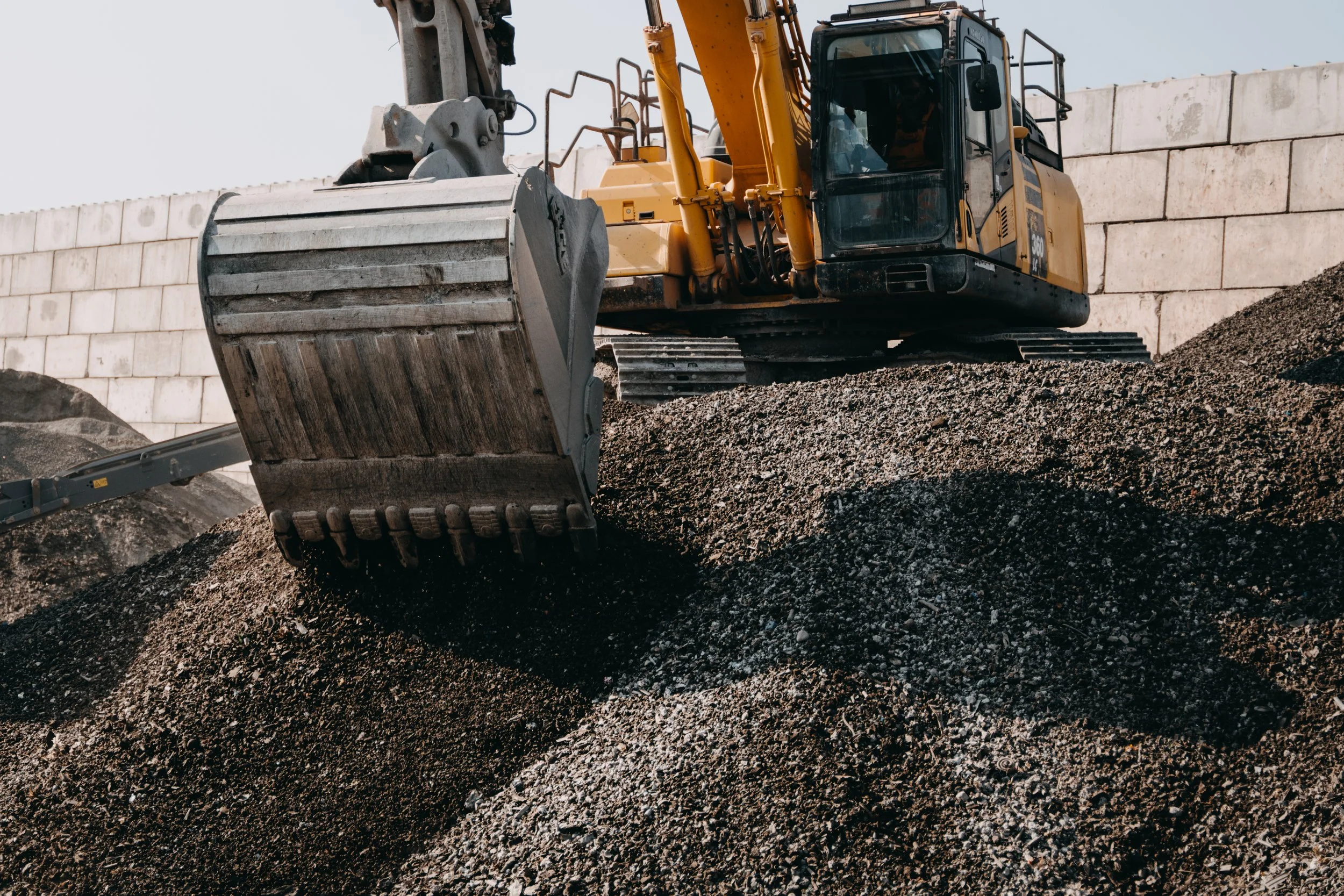
We operate three sites across the UK and process over 400,000 tonnes of non-hazardous IBA each year. From this, we recover metals such as aluminium, copper and other ferrous and non-ferrous materials, which are then sold globally as a lower-carbon alternative to virgin materials.
We also produce high-quality Incinerator Bottom Ash Aggregate (IBAA), supported by robust quality assurance processes and both in-house and external testing to ensure compliance with all regulatory and customer requirements.
Q: What steps have you taken to improve sustainability across operations?
A: Sustainability is at the core of what we do, our entire business is built around recovering materials that might otherwise go to landfill.
We’ve made significant investments across all our sites to minimise environmental impact, including dust and noise control systems such as water misting and barrier solutions. More recently, we’ve introduced a surface water recycling system at our Stanton site, allowing us to manage water more sustainably and reduce our reliance on fresh water.
Q: What are the biggest challenges currently facing the industry?
A: One of the main challenges is the evolving regulatory landscape, particularly around environmental compliance and the certification of aggregate products. These requirements are becoming increasingly stringent, but we have strong experience and a proven track record in meeting them.
Another challenge is perception. There can still be hesitation around using IBAA because it originates from waste, despite it being a high-quality, rigorously tested material. A big part of our work is educating customers, once they see our processes and quality controls, perceptions tend to change quickly.
Q: How do you maintain safety and efficiency in a heavy industrial environment?
A: Safety is fundamental to everything we do. We have a strong safety culture where all employees understand that no task is more important than doing it safely.
We support this with proactive hazard identification, incident management and regular, meaningful safety conversations between teams and leadership. We also continuously improve our safety, quality and environmental systems, and we’re proud to maintain ISO45001, ISO9001 and ISO14001 accreditations.
Ultimately, our performance comes down to our people, we have a highly skilled and experienced operations team that consistently delivers high standards.
Q: What opportunities do you see for the future?
A: There are exciting opportunities ahead, particularly in advancing metal recovery through new separation technologies. Even small improvements in recovery rates can have a significant impact at our scale.
There’s also growing potential for wider adoption of IBAA as a mainstream construction material, both in unbound and bound applications.
Finally, our processes naturally absorb and store carbon through carbonation. We’re actively exploring ways to enhance and better demonstrate this capability, which could play an important role in supporting the transition to a low-carbon economy.
Through innovation, operational excellence and a clear focus on sustainability, Johnsons Aggregates & Recycling continues to play a leading role in transforming waste into valuable resources.